



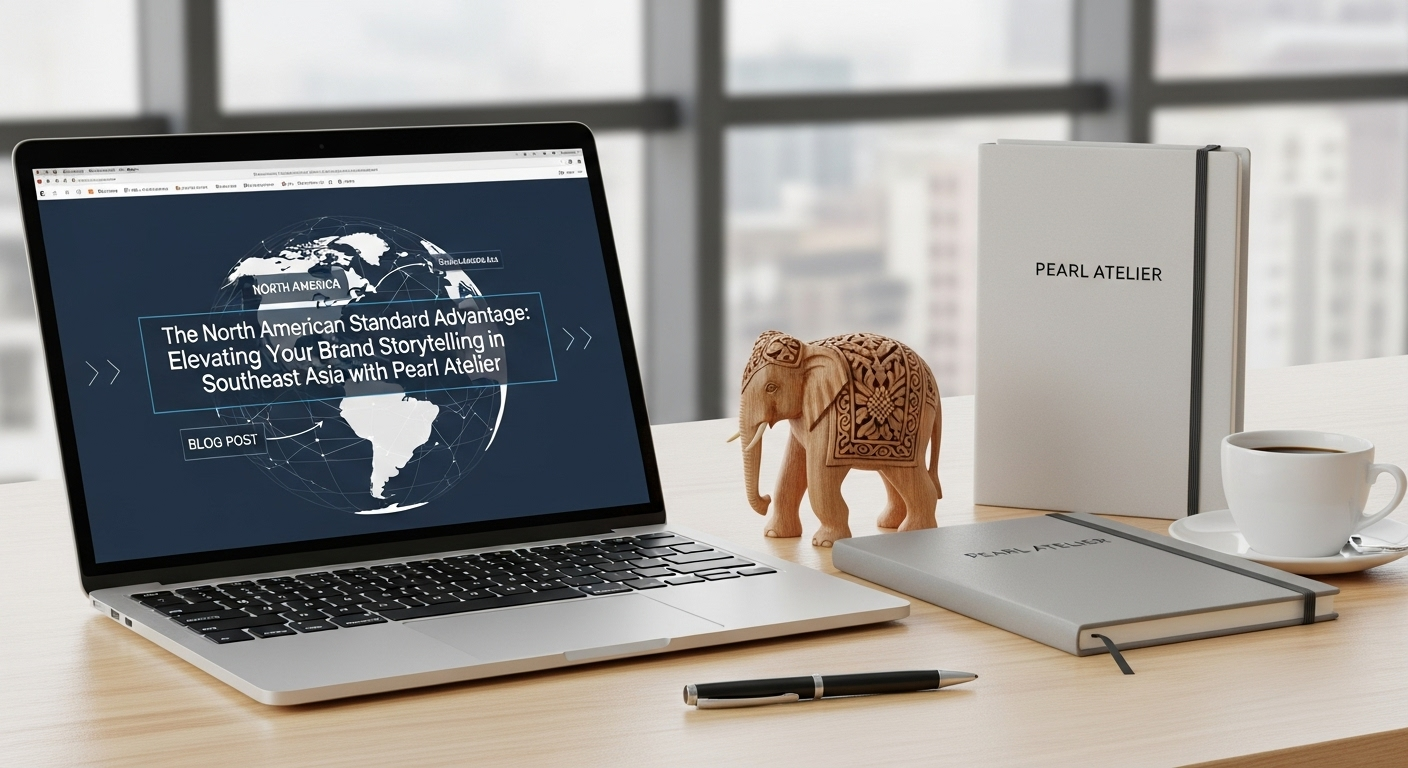
The North American Standard Advantage: Elevating Your Brand Storytelling in Southeast Asia with Pearl Atelier
By the end of the year, Southeast Asia’s digital economy is projected to skyrocket to over $330 billion. This isn’t just growth; it’s a seismic shift in global commerce, driven by one of the most dynamic and mobile-first consumer bases on the planet. Yet, this incredible opportunity is also a minefield. The reason? The vast majority of Western brands enter the region armed with a marketing playbook that is fundamentally misaligned with the intricate tapestry of cultures, values, and digital behaviors that define Southeast Asia.
Simply transplanting a successful North American strategy into markets like Vietnam, Thailand, or Indonesia is a proven recipe for failure. The region is not a monolith. It’s a complex ecosystem where consumer trust is paramount, and generic, one-size-fits-all messaging gets lost in the noise. This is where a more strategic, disciplined approach becomes a game-changing asset. Success hinges on a new paradigm: blending the systematic, data-driven rigor of a North American strategic framework with a deep, authentic understanding of local nuances. This is the essence of The North American Standard Advantage: Elevating Your Brand Storytelling in Southeast Asia with Pearl Atelier.
Why Is a Standard Western Marketing Approach Failing in Southeast Asia?
For decades, Western brands have viewed international expansion as a matter of replication. However, the Southeast Asian market of 2025 is a powerful testament to the flaws in this “plug-and-play” strategy. The region is a vibrant collection of distinct cultures, languages, and consumer behaviors that do not respond to a monolithic approach. Companies entering without deep localization often face significant challenges, from messaging that doesn’t resonate to operational friction that erodes customer trust.
The core issue is a lack of cultural fluency. Southeast Asia is not one market; it’s a collection of unique economies, including Indonesia, Vietnam, Thailand, Singapore, the Philippines, and Malaysia. Each has its own regulatory frameworks, preferred social media platforms, and cultural etiquette. An advertising campaign that is a hit in Singapore might be ineffective or even poorly received in Thailand. This is why The North American Standard Advantage: Elevating Your Brand Storytelling in Southeast Asia with Pearl Atelier isn’t about imposing a foreign model, but about adapting a proven strategic framework to local complexities.
The Myth of the “Global Consumer”
The concept of a single “global consumer” has been largely debunked. While universal human emotions like ambition and the desire for connection are central to powerful brand stories, the context in which these stories are told matters immensely. Cultural values shape how messages are interpreted.
- Individualism vs. Collectivism: Western marketing often emphasizes individual achievement. In many Southeast Asian cultures, however, themes of community, family harmony, and respect for authority are more powerful motivators.
- Direct vs. Indirect Communication: North American communication styles tend to be direct. In contrast, many Asian cultures prefer indirect communication, using metaphors and symbols. A message seen as straightforward in the U.S. might be perceived as blunt in Malaysia.
- Local Trust and Relevance: Consumers are increasingly showing a preference for brands that feel local. This trust is built through localized content, partnerships with local influencers, and a genuine understanding of regional lifestyles. In fact, 74% of consumers in the Asia Pacific region are concerned about privacy and data-sharing, making trust a critical currency.
What is the North American Standard and How Does It Offer an Advantage?
The “North American Standard” in marketing is not a rigid set of rules, but a disciplined approach rooted in data, transparency, and a consumer-centric mindset. In 2025, this has evolved to include a heavy emphasis on AI-enhanced personalization and authentic communication. The advantage comes from applying this systematic framework to the creative and often chaotic landscape of Southeast Asian markets. While local competitors may have an intuitive grasp of the culture, they may lack a structured, data-driven approach to brand building. A Western brand, guided by the North American standard, can leverage this discipline to create a more consistent, trustworthy, and resonant brand story.
Pillar 1: A Commitment to Data Transparency and Governance
One of the most significant shifts in global consumer behavior is the demand for transparency. Consumers want to know a brand’s values and how their data is being used. Transparent communication builds trust, which directly impacts purchases. This is a core tenet of modern North American marketing.
In Southeast Asia, where data privacy regulations are rapidly evolving, adopting a high standard of data governance is a competitive differentiator. The ASEAN Digital Masterplan 2025 emphasizes the need for a secure digital environment. Brands that proactively embrace transparency in data handling will build the trust that consumers crave, fostering long-term loyalty that transcends price sensitivity. With 84% of consumers in the region worried that scams are on the increase, demonstrating robust security is non-negotiable.
Pillar 2: Data-Driven Personalization and Strategy
North American marketing is intensely data-driven. Strategies are built on robust market research, consumer segmentation, and performance analytics. While many companies in Southeast Asia are rich in data, they often lack the capacity to turn it into actionable insights. A disciplined approach to data allows a brand to:
- Go Beyond Surface-Level Localization: Instead of just translating an ad, data analysis can reveal which cultural references, colors, and themes resonate with specific demographics within a country.
- Optimize for a Mobile-First World: With Southeast Asia’s high mobile penetration, data on user behavior across platforms like TikTok, Instagram, and local e-commerce apps is invaluable for creating effective, platform-specific content. By 2027, it’s expected that 402 million users in the region will engage in e-commerce.
- Justify Premium Pricing: By understanding consumer needs deeply, brands can create value that justifies a higher price point, a key challenge in a region known for being price-sensitive.
This systematic use of data ensures that localization efforts are not based on assumptions, but on a deep, evidence-based understanding of the target audience.
How Can Brands Adapt Storytelling Structures for Southeast Asian Audiences?
A compelling narrative creates an emotional connection that builds loyalty far more effectively than a simple list of product features. While the desire for stories is universal, the structure of those stories often needs cultural adaptation. Western narratives are often character-driven, focusing on an individual’s journey. This structure may need to be nuanced for Southeast Asian markets.
The key is not to abandon proven narrative frameworks but to infuse them with local values. This is central to achieving The North American Standard Advantage: Elevating Your Brand Storytelling in Southeast Asia with Pearl Atelier. An agency like Pearl Atelier Vietnam can be instrumental in this process, bridging the gap between a global brand identity and hyper-local execution.
Adapting Narrative Themes
A successful adaptation requires balancing a brand’s core message with regional cultural touchstones. A story about achieving personal success can be framed within the context of bringing pride to one’s family. A narrative about innovation can be linked to a collective desire for national progress. This allows a brand to maintain its global identity while making the story feel personal and relevant.
Consider these successful adaptations:
| Brand | Global Campaign Concept | Southeast Asian Localization Example |
|---|---|---|
| Coca-Cola | “Share a Coke” – Personal Connection | In parts of Asia, the campaign used popular nicknames and titles instead of just first names, respecting local customs around addressing others. |
| McDonald’s | Global Brand Identity | Introduced locally relevant menu items like the Nasi Lemak Burger in Singapore and used local slang to create a personal, local connection. |
| Nike | “Just Do It” – Overcoming Personal Challenges | Campaigns in the region often feature local athletes and celebrities overcoming adversity, resonating strongly with cultural values of perseverance and collective pride. |
The Role of Authenticity and Social Consciousness
Modern consumers, particularly younger generations in Southeast Asia, are increasingly socially conscious. They expect brands to have values and to take meaningful action on issues like sustainability. Brand storytelling that authentically incorporates these themes can build powerful connections. Authenticity cannot be faked; it requires a genuine commitment that is communicated transparently. This is another area where the North American focus on corporate social responsibility and transparent communication can be a significant advantage when applied with cultural sensitivity.
What Are the Practical Steps to Implementing This Strategy?
Successfully implementing The North American Standard Advantage: Elevating Your Brand Storytelling in Southeast Asia with Pearl Atelier requires a clear, step-by-step process that combines strategic discipline with on-the-ground expertise. It is a fusion of Western methodology and Eastern cultural fluency.
Step 1: Conduct Deep-Dive Market Research
Before any campaign is launched, it is critical to move beyond generic market data. This means investing in research to understand the specific nuances of each target market. This research should uncover:
- Cultural Values: What are the core beliefs, traditions, and social norms?
- Consumer Behavior: How do consumers discover products? What influences their purchasing decisions?
- Competitive Landscape: Who are the local players? What stories are they telling?
For this, partnering with local experts is invaluable. For more on how data-driven strategies can be implemented, you can refer to resources from global authorities like the International Monetary Fund, which provides economic outlooks on the region.
Step 2: Develop a Core Brand Narrative with a Flexible Framework
Based on research, develop a core brand story that is true to your global identity but is designed to be flexible. This narrative should be based on universal human truths. However, create a framework that allows local teams to adapt key elements—such as characters, settings, and specific conflict points—to make the story resonate locally. This balance prevents brand dilution while ensuring cultural relevance. The goal, as publications like Harvard Business Review often note, is to blend global consistency with local adaptation.
Step 3: Build a Local Team or Partner with a Local Agency
Executing a localized strategy is nearly impossible from a distant headquarters. Success depends on having people on the ground who possess an innate understanding of the local culture. This can be achieved by hiring a local marketing team or, more efficiently, by partnering with a specialized agency. An organization like Pearl Atelier Vietnam is equipped to translate a global strategy into a locally executable plan, navigating everything from influencer collaborations to the nuances of regional customs.
Step 4: Execute, Measure, and Iterate
The final step is to launch, but the work doesn’t stop there. Employing the North American standard’s focus on analytics, every campaign’s performance must be meticulously tracked. Use data to understand what’s working and what isn’t. Be prepared to iterate quickly. The Southeast Asian market is dynamic, and consumer preferences can shift rapidly. An agile approach, where strategies are constantly refined based on real-time feedback, is essential for long-term success. This iterative process is the hallmark of a truly data-driven organization and is the final component of The North American Standard Advantage: Elevating Your Brand Storytelling in Southeast Asia with Pearl Atelier.
Key Takeaways
- Southeast Asia’s digital economy is set to exceed $330 billion by 2025, but the market is highly fragmented, requiring deep cultural localization for brand success. A copy-paste Western strategy is a proven recipe for failure.
- The North American Standard Advantage lies in applying a systematic, data-driven framework—focused on transparency, consumer-centricity, and structured narratives—to the unique cultural landscape of Southeast Asia.
- Core North American principles like data transparency and brand authenticity are increasingly demanded by SEA consumers, who prioritize trust and shared values when making purchasing decisions.
- Successful brand storytelling in SEA involves adapting universal themes to local contexts, as seen in campaigns by major brands that balance a global identity with localized execution.
- Partnering with an agency like Pearl Atelier Vietnam, which understands both Western strategic frameworks and local market intricacies, is critical to navigating the region’s complexity in product registration, pricing, and platform operations.
How Can You Get Started with Confidence?
Navigating the complexities of Southeast Asia’s diverse markets while upholding a globally consistent brand message is a significant challenge. The path is fraught with cultural missteps, regulatory hurdles, and intense local competition. Attempting this journey without an experienced guide can lead to wasted resources and a damaged brand reputation.
The solution is to partner with a team that embodies the very principles discussed: a blend of disciplined, data-driven Western strategy with deep, authentic Eastern cultural fluency. This is the core of The North American Standard Advantage: Elevating Your Brand Storytelling in Southeast Asia with Pearl Atelier.
Don’t leave your brand’s future to chance. Let our experts help you craft a resonant, effective, and authentic brand story for one of the world’s most exciting markets. We invite you to book a free, no-obligation consultation call with the Pearl Atelier team to discuss your brand’s vision for Southeast Asia and learn how we can help you achieve it.

